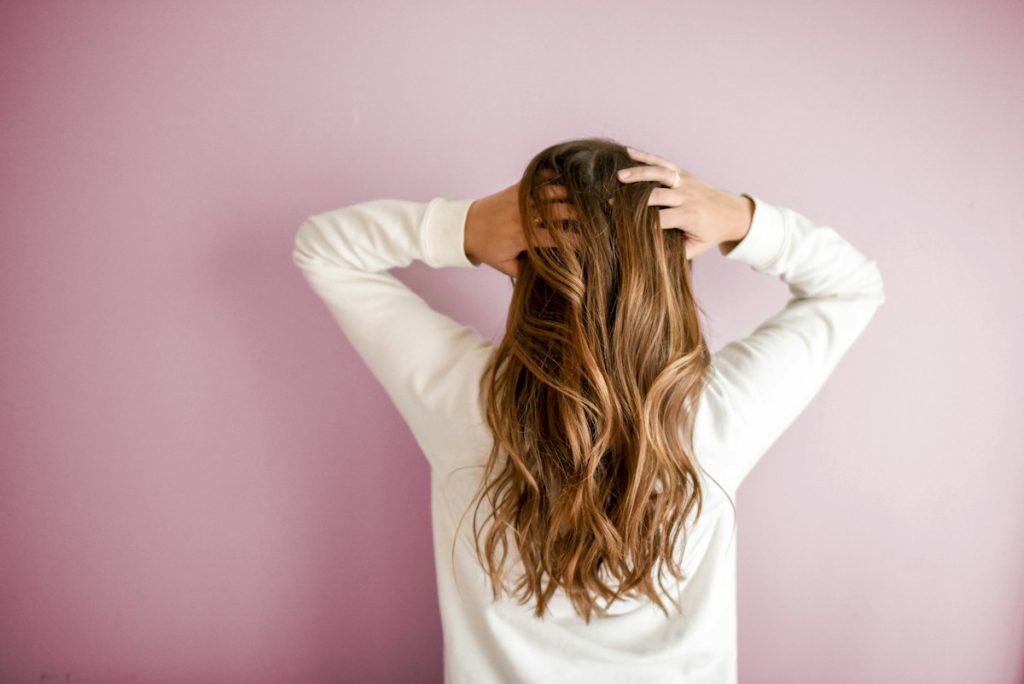
Hair is not living tissue. Once keratin fiber emerges from the scalp follicle, it possesses no metabolic capacity to repair itself biologically. For decades, the salon industry relied on silicone oils and cationic conditioners (quaternium compounds) to temporarily mask damage by smoothing down frayed cuticle scales. However, the introduction of molecular bond-building technology transformed trichology by targeting the internal structural cortex of hair.
The Structural Biology of Hair Keratin
Each hair strand is comprised of an outer cuticle protecting an inner cortex packed with alpha-helical keratin polypeptide chains. These chains are bound together by three distinct types of chemical bonds:
- Hydrogen Bonds: Weak and temporary; easily broken by water and reformed during heat styling and blow-drying.
- Salt / Ionic Bonds: Dependent on pH changes; susceptible to acidic or alkaline shifts in haircare formulas.
- Covalent Disulfide Bonds (-S-S-): The structural backbone of hair integrity. Formed between adjacent cysteine amino acids, these strong covalent bonds provide elasticity, tensile strength, and structural resilience.
When hair undergoes chemical bleaching, permanent waving, or repeated heat styling above 200°C, these disulfide bonds are broken via oxidation, leaving behind compromised cysteic acid molecules that cannot re-link naturally. The result is brittle, porous, and snapping hair fibers.
| Technology Type | Molecular Mechanism | Depth of Action | Longevity of Effect |
|---|---|---|---|
| Traditional Deep Mask | Fatty alcohols & silicones coat outer cuticle | Superficial Cuticle Only | 1 – 2 Washes (Rinses Away) |
| Protein Treatments | Hydrolyzed keratin temporarily fills gaps | Outer Cortex / Cuticle | 2 – 3 Washes (Can cause stiffness) |
| Biomimetic Bond Builders | Re-links broken sulfur bridges covalently | Deep Internal Keratin Cortex | Permanent Until Next Chemical Trauma |
How Modern Bond Re-linkers Function
Active bond-multiplying molecules (such as Bis-Aminopropyl Diglycol Dimaleate and patented peptide sequences) possess dual-reactive terminal groups. They navigate through the swollen cuticle layers into the hair cortex, finding single sulfur hydrogen bonds that have lost their partner, and covalently cross-linking them into artificial disulfide bridges.
In clinical tensile strength tests, hair fibers treated with active bond builders exhibit up to a 67% reduction in breakage during wet combing and a measurable restoration of natural elasticity.
Bond Building Advantages
- Restores structural tensile strength to bleached, porous strands
- Re-establishes curl pattern definition in heat-damaged curls
- Cumulative structural benefits with consistent weekly application
- Compatible with all hair types and color-treated palettes
Application Guidance
- Not a replacement for moisture; requires pairing with hydrating conditioners
- Requires a 10 to 20 minute damp leave-in window before shampooing
- Overuse of supplemental hydrolyzed proteins can lead to brittle stiffness
The Salon Restorative Protocol
For compromised, color-treated, or heat-styled hair, incorporate a covalent bond-building treatment once weekly on damp, unwashed hair for 20 minutes, followed by a sulfate-free shampoo and a deeply moisturizing lipid conditioner. This dual-pronged strategy addresses both internal cortical strength and external cuticle suppleness.